Alison is a writer and cultural historian based in Belfast. Alison is fascinated by how national narratives intersect with the intimate, everyday realities of people’s lives and the stories we tell about this. She has expertise on Irish literary, cultural and political history; ‘the Troubles’; girlhood; and has particular interests in the histories and cultures of love, romance and intimacy.
Alison Garden is a UKRI Future Leaders Fellow at Queen’s University, Belfast, working on a social and cultural history of mixed marriage in modern Ireland. From 2018-2020 she was a Marie Skłodowska-Curie Fellow at Queen’s University Belfast. From 2016-2018, she was an Irish Research Council Fellow in the School of English, Drama and Film at University College Dublin, where she was previously a Leverhulme Postdoctoral Fellow in the Humanities Institute from 2015-2016. Alison is a Fellow of the Higher Education Academy and the UK Royal Historical Society; she is an inaugural member of Young Academy Ireland.
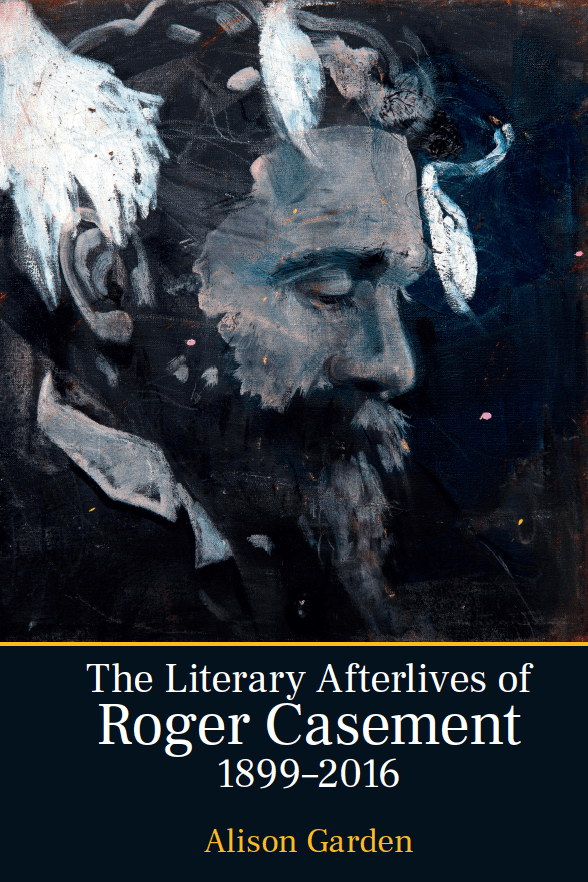
Alison’s first book, The Literary Afterlives of Roger Casement, 1899-2016, was published with Liverpool University Press in 2020. She is co-editor of Mixed Marriage in Ireland and its Diaspora (2026); Brian Moore in Context (2023); Rethinking the 1980/81 Hunger Strikes (2020) and The Irish Atlantic (2015). She is currently finishing her second book, a study of intimacy and political imagination in late-twentieth century northern Ireland.
Alison is committed to supporting Early Career Researchers (ECRs) through demystifying the postdoc experience; you can find her guides to various postdoc schemes here. In 2021, 2022 and 2023 she hosted #ECRdays, a series of online talks exploring academic opportunities after the PhD. There are recordings for each year here: 2021, 2022 and 2023.
Alison is a firm believer in the effectiveness of structured writing retreats and was lucky enough to train as a writing retreat facilitator with Professor Rowena Murray. She currently runs in-person and online retreats for academics, students and creative writers.